No prostate supplement has earned the title of best, and none has been shown to shrink an enlarged prostate. Mayo Clinic notes that no herbal supplement is approved in the United States to treat one, and saw palmetto, the most-studied option, gave little or no benefit for BPH symptoms in a 2023 review of 27 studies summarized by NIH's NCCIH. If you still want to try one, get your symptoms checked first and pick a fully disclosed label.
Below you'll find the research on the usual ingredients, the label checks worth doing, the red flags, and the facts on ProstaVive, the prostate product we have reviewed. We haven't tested these products, so we don't rank them.
Enlarged prostate basics, and when to see a doctor
Benign prostatic hyperplasia (BPH) is a prostate that has grown larger than normal without cancer being the cause, as NIDDK defines it. It becomes more common with age: NIDDK estimates it affects 5 to 6 percent of men aged 40 to 64 and 29 to 33 percent of men 65 and older. MedlinePlus adds that BPH isn't cancer and doesn't raise your risk of prostate cancer.
According to Mayo Clinic, the common symptoms are a frequent or urgent need to urinate, getting up at night to pee, trouble starting, a weak or stop-and-start stream, dribbling at the end, and a bladder that never feels fully empty. Size doesn't predict severity: a slightly enlarged gland can cause major symptoms, and a very large one only minor ones.
That overlap is the best reason not to self-treat. Mayo Clinic lists urinary tract infections, an inflamed prostate, a narrowed urethra, bladder or kidney stones, nerve problems and cancer of the prostate or bladder as conditions that can mimic BPH, along with some cold and allergy medicines. It recommends talking to a provider about urinary symptoms even when they don't bother you, and getting help right away if you can't pass urine. NIDDK adds three more reasons to seek care promptly: painful, frequent and urgent urination with fever and chills; blood in the urine; and great discomfort or pain in the lower abdomen or urinary tract.
What proven treatment looks like
Supplement claims are easier to judge next to the medical options, which Mayo Clinic lays out this way: if symptoms don't get in the way of your life, you can hold off and watch for changes; medicine is the most common treatment for mild to moderate symptoms; and surgery or other procedures come in when medicine isn't enough or isn't wanted.
- Alpha blockers such as tamsulosin and alfuzosin relax the muscle of the bladder neck and prostate, which makes urinating easier.
- 5-alpha reductase inhibitors such as finasteride and dutasteride shrink the prostate by blocking the hormone changes that drive its growth. They can take up to six months to work well and can cause sexual side effects.
- Tadalafil, better known for erectile dysfunction, has studies suggesting it can also treat an enlarged prostate.
- Procedures range from water vapor therapy and prostate lifts to laser surgery and transurethral resection of the prostate (TURP).
NIDDK's self-care advice: drink less before bed or outings, limit alcohol and caffeine, stay physically active, and don't hold urine for long periods. It also says researchers have not found eating, diet or nutrition to cause or prevent BPH, which is worth remembering when a sales page implies your symptoms come from a missing nutrient.
What the research says about common prostate supplement ingredients
Saw palmetto
Saw palmetto is the best-known prostate ingredient. NCCIH summarizes a 2023 review of 27 studies in men with BPH: taken alone, the herb provided little or no benefit for symptoms. Two NIH-funded trials in that review, one of which raised doses to three times the usual amount, found no improvement either. The reviewers couldn't reach firm conclusions about blends that pair saw palmetto with other herbs. Mayo Clinic points to the American Urological Association's view that many supplement studies for BPH have weaknesses, such as not running long enough, and says two stronger studies found saw palmetto no better than a placebo.
On safety, NCCIH calls it well tolerated in studies lasting up to three years, with mild, infrequent side effects such as digestive upset, dizziness and headache. It doesn't appear to affect PSA readings, even at higher-than-usual amounts, but it may be unsafe during pregnancy or breastfeeding.
Beta-sitosterol, pygeum and rye grass
Mayo Clinic says some people suggest these for enlarged-prostate symptoms, but their safety and long-term effectiveness haven't been proved. It also warns that some herbal products can raise the risk of bleeding or affect other medicines, so tell your provider about any you use.
Zinc and stinging nettle root
Zinc appears in many prostate formulas. It is an essential mineral: the NIH Office of Dietary Supplements puts the recommended amount at 11 mg a day for adult men and sets an upper limit of 40 mg a day for adults, counting food, drinks, supplements and medicines together. Too much over a long period can lower copper levels and weaken immunity, and zinc interacts with some antibiotics and with penicillamine.
Stinging nettle root is another common pick. None of the NIH or Mayo Clinic pages cited in this guide evaluates it for BPH, so we have no authoritative verdict to pass along either way.
Herbs sold for male hormones and energy
Some formulas, ProstaVive among them, add herbs such as ashwagandha, tongkat ali, maca and Panax ginseng, and these bring their own cautions. NCCIH reports rare cases of liver injury linked to ashwagandha, says it isn't recommended before surgery or for people with autoimmune or thyroid disorders, and advises people with hormone-sensitive prostate cancer to avoid it because it may raise testosterone. The NIH Office of Dietary Supplements notes that ginseng can reduce the blood-thinning effect of warfarin.
How to read a prostate supplement label
Skip the sales page and go straight to the Supplement Facts panel. Four checks cover most of what matters:
- Confirm the headline ingredient is there. If you're buying for saw palmetto, make sure it is actually listed. Some products sold for prostate health, ProstaVive included, don't contain it.
- Look for amounts, not just names. Under FDA labeling rules, a proprietary blend only has to show its total weight, with its ingredients listed in descending order by weight. Inside a blend, only nutrients with an established daily value must be broken out with their own amounts, so a long list of herbs in a small blend tells you little about how much of each you get.
- Add up the nutrients. Check zinc against the 40 mg adult upper limit, counting any multivitamin you take.
- Read the claims for what they are. A supplement may say it supports prostate health, but its label must then carry the FDA disclaimer that the statement hasn't been evaluated by the agency and that the product is not intended to diagnose, treat, cure, or prevent any disease. The FDA says a product sold as a supplement but presented as treating or preventing a specific disease meets the definition of a drug. The agency also has no authority to approve supplements before they are sold, which is why any claim of approval deserves suspicion. Our explainer covers why supplements are not FDA-approved and what an "FDA-registered facility" does and doesn't tell you.
Red flags when shopping
- Promises to shrink the prostate, fix BPH or replace your medicine. Those are drug claims, and no supplement has earned them.
- Stories instead of studies. The FDA's health fraud guide warns that success stories are easy to make up and that marketplace and social media reviews can be fake. Quick fixes, a "secret ingredient" and claims that drug companies are hiding something are on its list of tip-offs too.
- References that don't match the product. A "scientific references" list should cite research on the ingredients and the condition on the label. When we checked ProstaVive's sales page, its references were weight-loss studies.
- Unverifiable ratings. A star average with no review count, or a "review" that sits in a news site's press-release section, is not independent evidence.
- Borrowed names on marketplaces. In September 2026 search results, an Amazon listing for a similarly named product from a different brand used "Prosta Vive reviews" as a keyword. Buy from the seller named on the official site and compare the label with the one described in our review.
ProstaVive: what the label says
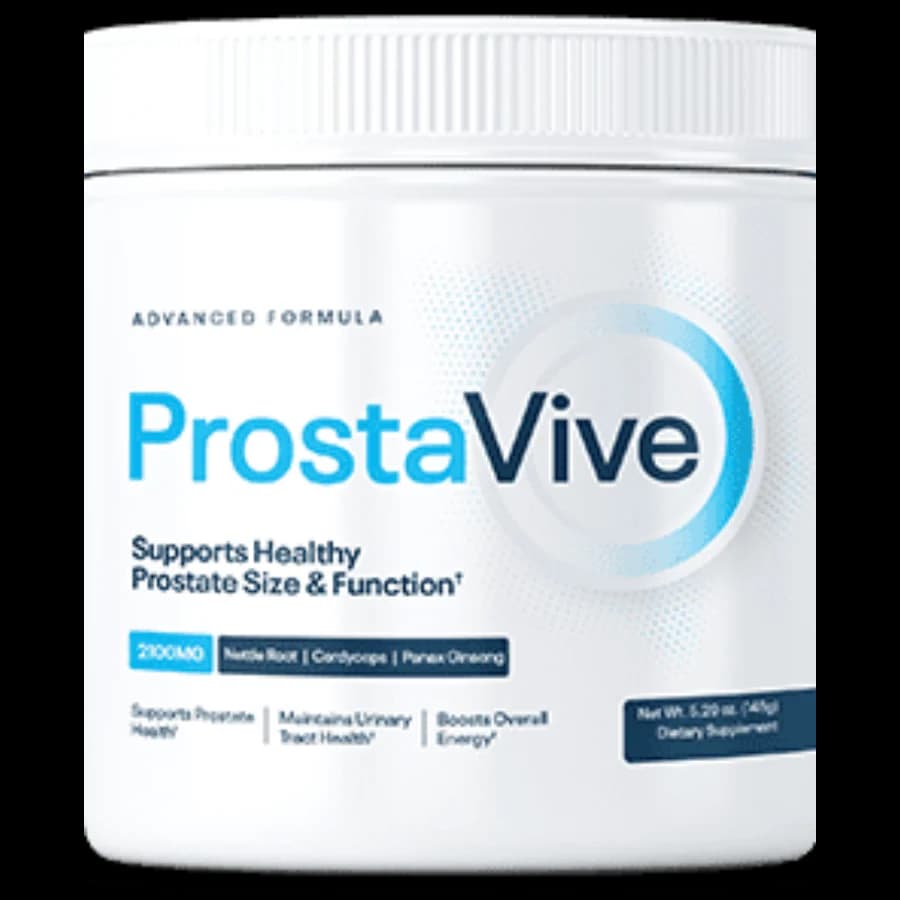
ProstaVive is the prostate product we have reviewed in depth. The table sticks to facts from its official label and policy pages, checked on September 30, 2026.
| Detail | ProstaVive |
|---|---|
| Format | Powder; 1 scoop (about 4.93 g) per serving, 30 servings per container |
| Daily use | 1 scoop mixed into water or another drink in the morning, on an empty stomach or about 60 minutes after eating |
| Guarantee | 180 days, full refund even if used, per the seller. Email a "Refund Request" first, then return all bottles; you pay return postage |
| Notable label facts | No saw palmetto. Zinc 12 mg; stinging nettle root extract 200 mg; fenugreek seed 500 mg; artichoke extract 300 mg; ashwagandha root extract 250 mg; cordyceps 250 mg; maca root extract 250 mg; tongkat ali 100 mg; Panax ginseng 50 mg; boron 5 mg; vitamin D3 50 mcg; vitamin B6 10 mg; magnesium 50 mg; plus a 200 mg blend of beet root, alfalfa, black currant, broccoli, pomegranate and raspberry with no per-ingredient amounts |
| Sold via | The official site, prostavive.org, with orders processed by ClickBank |
Three things stand out. It is not a saw palmetto formula: its overlap with the usual prostate ingredients is zinc and nettle root, and the rest of its botanicals are ones none of the sources in this guide evaluate for BPH. The seller positions it as support for prostate health, healthy male hormones, circulation and energy, which is marketing language, not a finding. And its ashwagandha brings the cautions above, including NCCIH's advice for men with hormone-sensitive prostate cancer.
The seller says ProstaVive is made in the USA in an FDA-registered facility that follows good manufacturing practices; registration is not the same thing as approval. Per the seller, the 180-day guarantee covers opened product, but the steps matter; our guide to ClickBank and Digistore24 refunds walks through how that works.
For the complete ingredient breakdown, directions and refund details, read our ProstaVive review.
Who should talk to a doctor before taking a prostate supplement
- Anyone whose urinary symptoms haven't been evaluated. Mayo Clinic stresses finding out whether a treatable cause is behind them, and notes that without treatment the risk of a dangerous urinary blockage can rise.
- Men with hormone-sensitive prostate cancer, and anyone with a thyroid or autoimmune condition or an upcoming surgery, if the product contains ashwagandha (NCCIH).
- People taking medicine for diabetes, blood pressure, thyroid disease or seizures, sedatives, or drugs that suppress the immune system, all of which may interact with ashwagandha, according to NCCIH.
- People on warfarin or other blood thinners. The Office of Dietary Supplements notes ginseng can weaken warfarin's effect, and Mayo Clinic says some herbal products can raise bleeding risk.
- People taking quinolone or tetracycline antibiotics, penicillamine or thiazide diuretics, which interact with zinc (Office of Dietary Supplements).
- Men already on BPH medicine. Don't stop or swap a prescription on your own. NCCIH advises anyone who takes medicine to check with a provider before starting an herbal product, because some herbs and medicines interact in harmful ways.
Whatever you decide, bring the label to your next appointment; Mayo Clinic suggests listing every medicine, vitamin and supplement you take before a BPH visit. For more products in this area, browse our men's health reviews.
Sources
Checked on September 30, 2026. Product facts come from each manufacturer's official pages, linked in the individual reviews.
- NCCIH (NIH) — Saw Palmetto: Usefulness and Safety
- Mayo Clinic — Benign prostatic hyperplasia (BPH): Diagnosis and treatment
- Mayo Clinic — Benign prostatic hyperplasia (BPH): Symptoms and causes
- NIDDK (NIH) — Enlarged Prostate (Benign Prostatic Hyperplasia)
- MedlinePlus — Enlarged Prostate (BPH)
- NIH Office of Dietary Supplements — Zinc: Fact Sheet for Consumers
- NCCIH (NIH) — Ashwagandha: Usefulness and Safety
- NIH Office of Dietary Supplements — Dietary Supplements for Exercise and Athletic Performance
- FDA — Questions and Answers on Dietary Supplements
- FDA — Dietary Supplement Labeling Guide, Chapter IV: Nutrition Labeling
- FDA — 6 Tip-offs to Rip-offs: Don't Fall for Health Fraud Scams