The best-supported toenail fungus treatments are prescription: antifungal pills such as terbinafine or itraconazole, and medicated nail solutions such as efinaconazole, tavaborole or ciclopirox, according to the American Academy of Dermatology. None works fast. Toenail courses run 12 to 48 weeks, and a clear nail can take a year or more to grow in. Over-the-counter creams usually don't help, says MedlinePlus, so get a nail test before you spend money.
Below: how nail fungus is diagnosed, the full range of options from prescription pills to home remedies, how to read the label on a nail product, the red flags in this category, and where Kerassentials, the nail oil we have reviewed, fits. We haven't tested these products, and we don't rank them.
What nail fungus is, and why the diagnosis comes first
Nail fungus, or onychomycosis, is a fungal infection of the toenails or fingernails, and the AAD says it almost never goes away on its own and can spread. Mayo Clinic describes it as starting with a white or yellow-brown spot under the tip of the nail; as it goes deeper, the nail can discolor, thicken and crumble at the edge. It is more common in toenails than fingernails. Cleveland Clinic estimates it affects about 1 in 10 people overall and about 1 in 2 people older than 70.
The catch is that other problems look the same. The AAD notes that nail psoriasis or a nail injury can mimic fungus, and Mayo Clinic adds that yeast and bacteria can infect nails too; green or black discoloration points toward bacteria. That's why doctors confirm the diagnosis before treating. They clip the nail or scrape debris from under it, then examine the sample under a microscope or send it to a lab. A culture can identify the exact fungus, though MedlinePlus says results may take 4 to 6 weeks.
See a provider if self-care hasn't helped and the nail keeps getting more discolored, thick or misshapen, per Mayo Clinic, and sooner if you have diabetes, bleeding, swelling or pain around the nail, or difficulty walking. Cleveland Clinic adds poor circulation, a weakened immune system, and redness, pain or pus near the nail, since toenail fungus can rarely lead to a skin infection called cellulitis.
Treatment options, strongest evidence first
Prescription pills
Oral antifungals are often the first choice, says Mayo Clinic. They help a new, uninfected nail grow in and slowly replace the infected part. The AAD's details for toenails:
- Terbinafine is taken daily for 12 weeks. You need a liver test before starting and again at 6 weeks, since liver damage is a possible but rare side effect. The AAD says the infection itself can clear in 6 to 12 weeks, but the nail needs a year or longer to grow out, so discoloration lingers. It is not taken while breastfeeding.
- Itraconazole is taken once a day with a full meal for 12 weeks. It can interact with many medicines, including statins, and shouldn't be taken during pregnancy.
Mayo Clinic adds that success rates appear lower in adults over 65, that these drugs may not be recommended for people with liver disease or congestive heart failure, and that you may need occasional blood tests. MedlinePlus sums up the picture: medicines clear the fungus in about half of the people who try them, and it can return even when treatment works.
Prescription nail solutions
For mild and sometimes moderate cases, and for people 60 and older, dermatologists may prescribe a medicine you apply to the nail, according to the AAD:
- Efinaconazole 10% solution, which the FDA has approved for toenail fungus in patients 6 and older, applied once a day, usually for 48 weeks.
- Tavaborole 5% solution, also approved by the FDA for toenail fungus in patients 6 and older, applied daily, usually for 48 weeks.
- Ciclopirox nail lacquer, painted on daily and removed with rubbing alcohol every 7 days, with loose infected nail trimmed away regularly.
Thick nails get in the way of any topical. The AAD says softening them with a 40% urea cream or ointment can improve results, and Mayo Clinic mentions nonprescription urea lotions for thinning nails before applying medicine.
Procedures
In the office, a dermatologist can trim infected nail, thin it (debridement), drill tiny holes so medicine penetrates (microdrilling), or remove part or all of the nail (avulsion). The AAD says a removed toenail can take 12 to 18 months to regrow. Lasers are a weaker option: the FDA has approved lasers only to improve how a nail looks after the infection has cleared, not to treat the infection itself, and insurance usually treats that as cosmetic.
Over-the-counter products and home remedies
This is where most shoppers start, and where the evidence is thinnest.
- Nonprescription antifungal creams. MedlinePlus says over-the-counter creams and ointments usually do not help nail fungus. The AAD explains why for terbinafine: the nonprescription cream is made for skin infections such as athlete's foot and cannot penetrate the nail. Mayo Clinic is somewhat more hopeful: it says self-care and nonprescription products sometimes clear an infection, suggests filing off white markings and soaking and drying the nails before applying a cream, and notes that the infection commonly comes back.
- What the FDA's rules cover. Nonprescription antifungals made under the FDA's over-the-counter monograph are for athlete's foot, jock itch and ringworm. The ingredients it allows include clotrimazole 1%, miconazole nitrate 2%, tolnaftate 1% and undecylenic acid at 10 to 25 percent, and the required directions state that the product is not effective on the scalp or nails.
- Tea tree oil and mentholated chest rubs. NCCIH says only a few studies have looked at tea tree oil for nail fungus, and that the amount and quality of research are insufficient for any conclusions. The AAD says small studies of tea tree oil and mentholated cough-suppressing ointments hint at some benefit, but how well they work and what side effects they cause are still unknown.
So the honest answer to "what's the quickest way to get rid of it" is that there isn't one. Even the fastest prescription route means about three months of pills and a year or more of nail growth.
How to read the label on a nail-fungus product
- Drug or not? A nonprescription antifungal made under the FDA monograph identifies itself as an "antifungal" and lists one of the allowed active ingredients at the set strength. Oils and serums that skip this are sold on different terms, so read their claims with extra care.
- Check the percentage. If undecylenic acid is the active ingredient, compare it with the monograph's 10 to 25 percent range.
- Look for the nail warning. Monograph antifungals must say they are not effective on the scalp or nails, a useful reality check for any product that implies otherwise.
- Compare the routine with real treatment. Prescription solutions are applied every day for about 48 weeks. A product promising visible change in a few weeks is promising more than prescription treatment delivers.
- Mind the essential oils. NCCIH says tea tree oil can cause skin redness or irritation, more likely if the product is old or has been exposed to heat, light or air, and that it should never be swallowed: taken by mouth, it can cause confusion, unsteadiness and even coma.
Red flags
- Speed promises. "Clears fungus in days" runs against everything above, and the FDA's health fraud tip-offs warn that few conditions can be treated quickly, even with legitimate products.
- Before-and-after photos and success stories. The FDA notes that success stories are easy to make up and that marketplace and social media reviews can be fake.
- "What podiatrists don't want you to know." Conspiracy framing is one of the FDA's six tip-offs.
- Regulatory badges. Treat claims of FDA approval or an "FDA accredited" facility as something to verify; our explainer covers what FDA wording on a label does and does not mean.
- Marketplace copies. In September 2026 search results, third-party Walmart listings used the Kerassentials name, one of them a three-piece pack priced far below the official packs. Buy from the official seller.
Kerassentials: where a topical oil fits
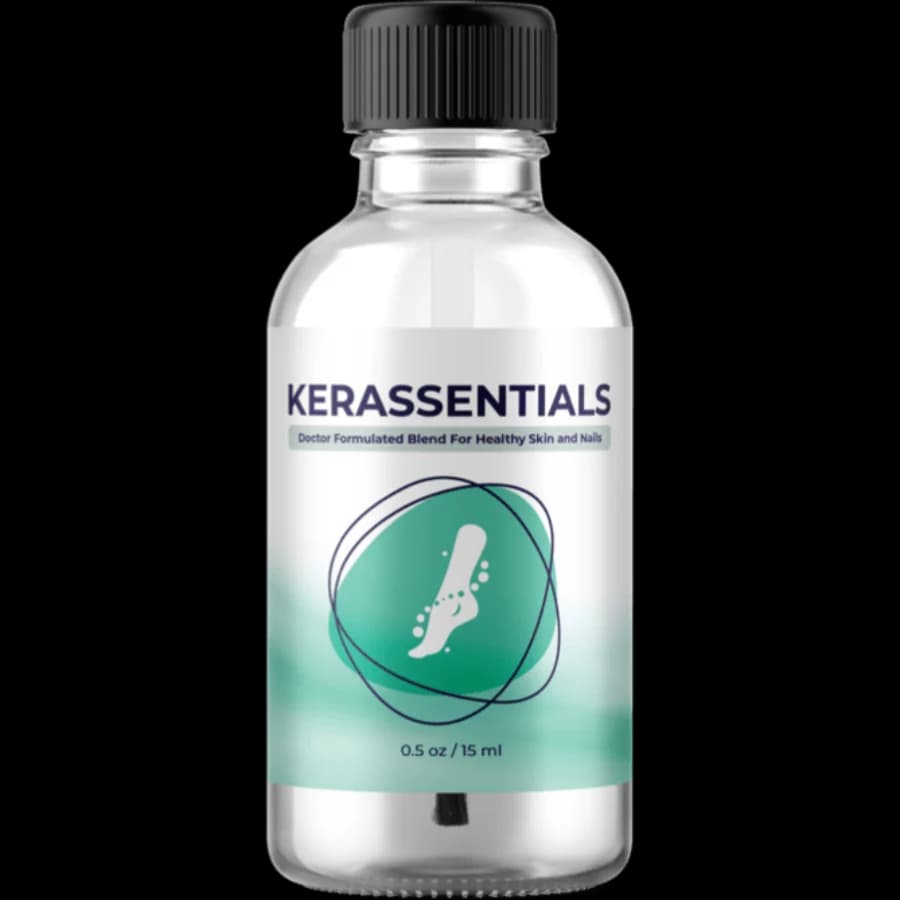
Kerassentials is the nail product we have reviewed in depth. It's a topical oil, not a pill, and the facts below come from its official label and policy pages, checked on September 30, 2026.
| Detail | Kerassentials |
|---|---|
| Format | Topical oil in a 0.5 oz (15 ml) bottle with a brush applicator |
| Daily use | 4 times a day, twice in the morning and twice in the afternoon: coat the nail, work the oil into the cuticle with a cotton swab, and file the nail with an emery board. External use only; don't swallow |
| Guarantee | 60 days from delivery. Return all bottles, empty or not, with the packing slip; you pay return shipping |
| Notable label facts | Undecylenic acid 5%, the only ingredient with a stated strength, plus 16 other listed components, including tea tree, clove bud, lemongrass, lavender, manuka, camphor and jojoba oils, menthol, aloe vera, vitamin E and mineral oil |
| Sold via | Official site, mykerassentials24.com, with orders processed by Digistore24; the smallest pack is 2 bottles |
The seller markets it as an oil for healthy nails and skin and pitches it against toenail and foot fungus, itching and odor; the label calls it a "Doctor Formulated Blend For Healthy Skin and Nails." The official site also states that it isn't intended to diagnose, treat, cure or prevent any disease. Its FAQ says the company's tests indicate results in around 9 to 12 weeks, a claim we couldn't verify, and describes the product as made in an "FDA accredited" facility. We found no GMP or made-in-USA statement on the official site.
Where does that leave it? At 5 percent, its undecylenic acid is below the 10 to 25 percent the FDA's monograph sets for that ingredient in athlete's foot, jock itch and ringworm products, and even products that meet the monograph must say they aren't effective on nails. Its essential oils, tea tree included, haven't been studied enough for anyone to draw conclusions about nail fungus. That places Kerassentials with the over-the-counter and home-remedy options above, not with the prescription treatments that have the strongest evidence. If you want to try it, get the nail diagnosed first and tell your doctor, especially if you're also using a prescription treatment.
For the full ingredient list, application routine and refund steps, read our Kerassentials review. If a refund becomes necessary, our guide to ClickBank and Digistore24 refunds explains the process.
Who should talk to a doctor first
- People with diabetes, poor circulation or a weakened immune system. Mayo Clinic warns that in people whose immune system is suppressed by medicine, diabetes or other conditions, nail fungus may lead to serious infections that spread beyond the feet. It also advises people with poor blood flow to their feet to see a provider for foot care rather than tackling thick nails alone.
- Anyone with pain, swelling, bleeding, redness or pus around a nail, or difficulty walking.
- Anyone whose nail is turning green or black, which Mayo Clinic links to bacterial rather than fungal infection.
- People who are pregnant, planning a pregnancy or breastfeeding, before starting treatment; the AAD notes some nail fungus treatments shouldn't be used then.
- People with liver disease or heart failure, or who take statins or many other medicines, before oral antifungals.
More nail and skin products we've reviewed are in our skin and nails category.
Sources
Checked on September 30, 2026. Product facts come from each manufacturer's official pages, linked in the individual reviews.
- American Academy of Dermatology — Nail fungus: Diagnosis and treatment
- American Academy of Dermatology — Nail fungus: FAQs
- Mayo Clinic — Nail fungus: Symptoms and causes
- Mayo Clinic — Nail fungus: Diagnosis and treatment
- Cleveland Clinic — Toenail Fungus (Onychomycosis/Tinea Unguium)
- MedlinePlus — Fungal nail infection
- NCCIH (NIH) — Tea Tree Oil: Usefulness and Safety
- FDA — OTC Monograph M005: Topical Antifungal Drug Products for Over-the-Counter Human Use
- FDA — 6 Tip-offs to Rip-offs: Don't Fall for Health Fraud Scams